Article: THE POWER OF WORDS ON A VISION BOARD
THE POWER OF WORDS ON A VISION BOARD
 How Language Supports Focus, Behavior, and Lasting Change
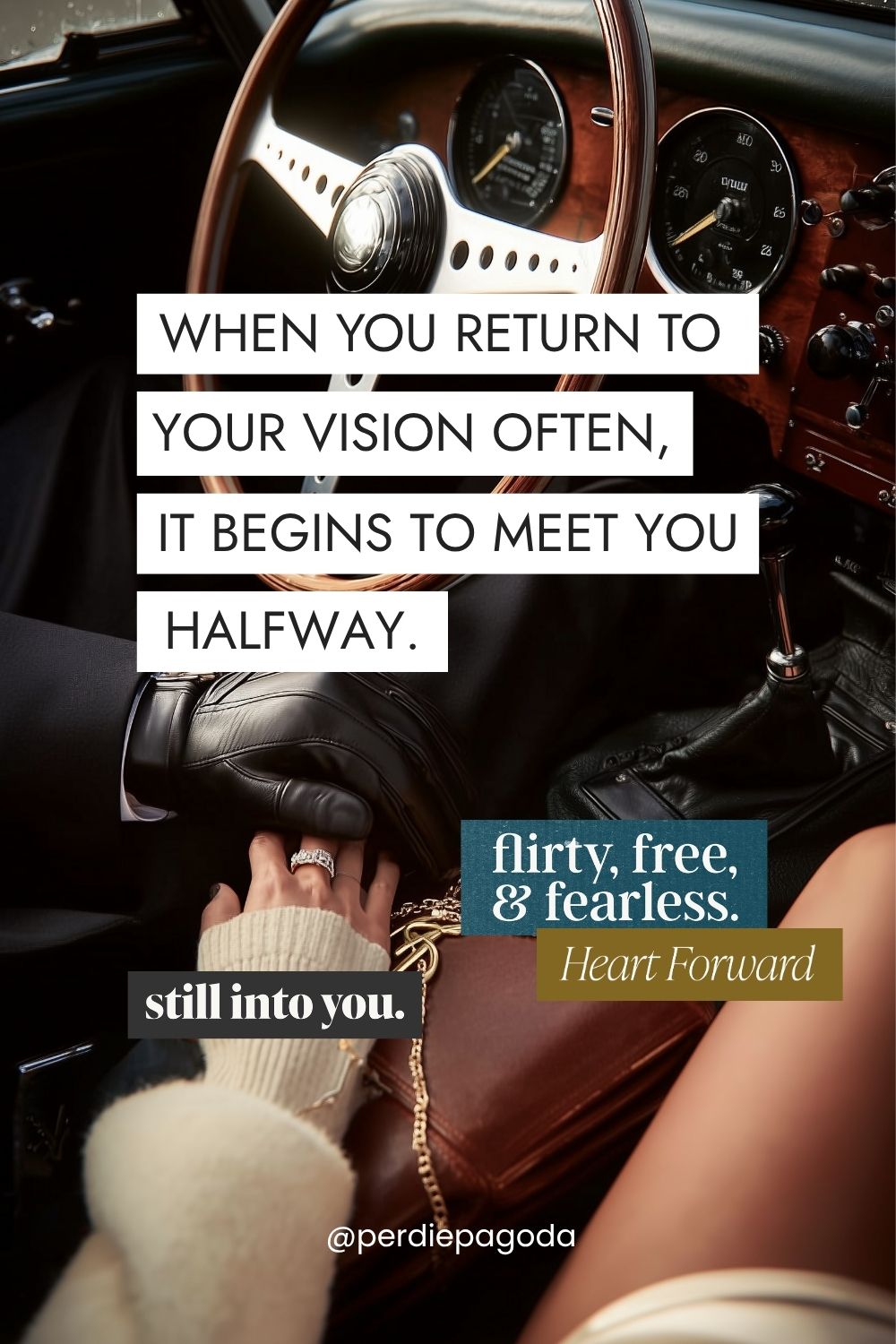
“Words shape the lens through which we see the world.”
Images often receive the spotlight in vision board conversations. They are visual, emotional, and immediately evocative. But words play an equally important role, one that is often misunderstood or overlooked.
From a neuroscience perspective, images and words have entangled purposes. Images spark emotion and imagination. Words provide structure, meaning, and propel emotion into action. Together, they help the brain organize intention into something it can recognize, return to, and act upon over time.
A vision board works best when both are present. Here we’ll discuss how words and language quietly carries the work forward.
Why Words Matter to the Brain
The brain is not passive. It is constantly predicting, categorizing, and filtering reality based on what it has learned to prioritize. Language plays a central role in that process.
Words help the brain assign meaning to experience. They label concepts, define direction, and create mental frameworks that guide attention. When you place words on a vision board you are giving the brain something specific to organize around.
Without language, intention remains open-ended. Words narrow focus. They turn abstraction into clarity. They help the mind understand what matters to you and why.
This is why vague or borrowed language often feels ineffective. The brain responds most strongly to words that feel personally meaningful and clearly defined.
(This idea builds on the foundation explored in Why Vision Boards Work, where we explain how attention and repetition shape perception over time.)
Choosing Words That Truly Work
Not all words create the same effect.
From a neurological standpoint, the brain responds most strongly to words that feel relevant and emotionally engaging. This is why choosing words for a vision board should be an internal process, not a performative one.
How do you know which words to choose? First, they should be personally meaningful to you. Effective words tend to share three qualities:
- They resonate personally, not aspirationally.
- They evoke a strong feeling, not just an idea.
- They describe direction, not fluff.
Words that feel forced or borrowed often create resistance and something in the nervous system registers that the language does not quite fit. In contrast, words that feel honest and aligned create a feel-good emotion within such as excitement, joy, love, etc. The brain registers them as believable.
This matters because the brain does not move toward what feels resisted. It moves toward what feels aligned enough to explore.
(This step-by-step selection process is explored more fully in How to Create a Vision Board, where clarity becomes the starting point.)
What Repetition Makes Possible
Change does not occur through a single moment of vision board viewing. It occurs through repetition.
Research on neuroplasticity shows that repeated thoughts strengthen neural pathways. The words you encounter often begin to influence how your brain filters information, evaluates choices, and interprets experience.
When you consistently review the words on your vision board, subtle shifts begin to take place. Certain ideas feel more natural to think about and opportunities related to those words become easier to notice. Decisions begin to naturally align with the direction you’ve stated.
These changes aren’t dramatic and noticeable in a day, they are small and subtle and occur with time.
Over time, the words on your board stop feeling like goals and begin functioning as reference points. They influence identity gradually, shaping how you respond to life. It’s only when looking back over time you realize a new reality has begun to take shape!
(This is where consistent engagement matters most, as explored in How to Use a Vision Board.)
Why Emotion Gives Words Momentum
Words alone do not create change. Emotion gives them weight.
Every thought produces a physiological response. When words evoke feelings like trust, steadiness, curiosity, or confidence, the nervous system shifts into a state that supports learning and openness. Stress responses soften. Receptivity increases.
This matters because the brain does not rewire effectively under pressure.
When you engage with the words on your vision board and allow yourself to feel what they represent, you are conditioning the body as much as the mind. You are practicing the emotional tone of the life you are creating before it fully arrives.
That emotional familiarity is what allows new behavior to feel natural instead of forced.
Words Shape Behavior Over Time
Behavior change rarely happens through willpower alone. It happens when new thoughts feel normal and new responses feel available.
The words you return to repeatedly become part of how you see yourself. It influences what feels aligned, what feels worth pursuing, and what actions feel reasonable to take next.
This is why words are not secondary on a vision board. They are fundamental.
They guide attention.
They support emotional regulation.
They influence behavior through consistency.
A Practice Rooted in Hope
A vision board is created because something in you is ready to change. Words help that change unfold gently and reliably.
When the right words are chosen and revisited consistently, change becomes less about effort and more about momentum. Thought shapes perception. Perception influences behavior. Behavior, repeated over time, reshapes life.
This is not about instant transformation, it’s about inevitability through practice.
With the right words and a daily relationship to them, clarity deepens. Choices align. And behavior begins to follow naturally.
Intentionally manifesting is not driven by inspiration alone. It is guided by focus. And focus begins with the words you choose to return to.
(If you’re new to this process, What Is a Vision Board offers a clear introduction to how images and language work together as tools for focus.)
Inspired visions, always -


Written by Perdie Pagoda